
An influential American Senator has moved a Congressional amendment to strip all US aid to Pakistan, Egypt and Libya -- totalling about $4 billion per annum -- and divided the fund equally for veterans jobs bill and deficit reduction programme.
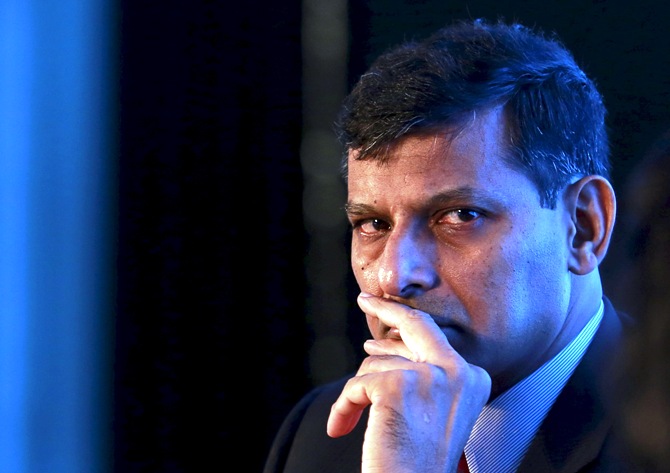
RBI Governor Raghuram Rajan said that consolidated fiscal deficit of the Centre and states rose to 7.2 per cent in 2015 from 7 per cent in the previous year.

With an eye on the adverse fallout of rising oil prices, the Reserve Bank of India (RBI) on Monday said the government's subsidy bill for petroleum products and fertilisers might cross the projections for 2011-12 and put fiscal consolidation plans under strain.

This is Finance Minister Pranab Mukherjee's fourth regular Budget.

The finance ministry expects a broad-based moderation in inflationary pressures on the back of an anticipated reduction in food prices as a result of the uptick in summer sowing. The retail inflation rate remained stubbornly clung to the 5 per cent mark in seven of the past eight months. "Core inflation is trending downwards, indicating a broad-based moderation in price pressures... Driven by strong domestic growth and benign global commodity prices, core inflation is declining continuously.

Given the tight control on expenditure the finance minister has exercised and how niggardly the increases have been on flagship programmes - Bharat Nirman has risen from Rs 32,473 crore (Rs 324.73 billion) to Rs 35,953 crore (Rs 359.53 billion) and employment guarantee from Rs 39,100 crore (Rs 391 billion) to Rs 40,100 crore (Rs 401 billion) - it's natural to wonder whether the deficit reduction targets are for real.
The Union Budget for 2004-05, which is being viewed as a "litmus test" for the Congress-led government, may unveil the roadmap for wiping out revenue deficit well in advance by 2007 and a subsequent reduction in fiscal deficit to manageable limits.

Domestic customers will get access to high-quality Swiss products such as watches, chocolates, biscuits, and clocks at lower prices as India will phase out customs duties under its trade pact with the EFTA bloc on these goods over a period of time. India and the four-European nation bloc EFTA signed a trade and economic partnership agreement (TEPA) on Sunday to boost trade and investments between the two regions. The European Free Trade Association (EFTA) members are Iceland, Liechtenstein, Norway, and Switzerland.
"The higher realisation of taxes in third quarter was associated with reduction in revenue and fiscal deficit," Minister of State for Finance S S Palanimanickam informed Rajya Sabha while tabling the statement on third quarterly review of receipts and expenditure for 2007-08.
The central government's fiscal deficit -- the difference between its total expenditure and receipts, excluding borrowings -- for 2006-07 has been reined in at 3.5 per cent of gross domestic product.

The GDP has been estimated at Rs 126.54 lakh-crore (Rs 126.54 trillion).
A whopping 29 per cent growth in the Centre's fiscal deficit to Rs 1,55,833 crore (Rs 1558.33 billion) or 6.8 per cent of GDP in 2001-02 has made the Comptroller and Auditor General sceptical of the long term target of two per cent by 2006.

Says fiscal trajectory has changed for the better over the past months.

Now that the economy is growing at a higher-than-expected rate, it is time to accelerate the pace of fiscal consolidation, and the Budget could be a good starting point, argues Rajesh Kumar.

India's merchandise exports in February shrank for the 15th straight month on continued weak demand from Europe, the South Asian nation's biggest market.

On the basis of Budget projections, the Centre needs Rs 7.3 trillion revenue during December-March and its expenditure must be limited to Rs 6.7 trillion.

The rising goods and services tax (GST) and personal income-tax collections may bolster the Narendra Modi government's ability to announce new schemes or enhance existing ones.

Showing signs of financial strain, the government's fiscal deficit in the first five months of the ongoing financial year has already touched 74.6 per cent of the budget estimate.

India plans to keep its fiscal deficit within 3.9% of GDP.

The finance minister's assertion that industry should not expect any spectacular announcements in the 2024 interim Budget suggest that the electoral imperatives of more tax concessions or higher expenditure on welfarist programmes could be far less pronounced than they were before the 2019 interim Budget, expects A K Bhattacharya.
'Since the bilateral deficit is a reality -- and a worry -- we need to find a way to deal with it,' says Ravi Bhoothalingam.
The World Bank has warned India that its growth prospects are weakened by high fiscal deficits and slow reforms, and the country needs to accelerate poverty reduction efforts.

The government had breached its fiscal deficit target given in the Budget for 2017-18 in November itself, touching 112 per cent of the limit.

India's trade account could come under pressure and there could be an inflation push if crude oil prices remain above the $90 per barrel (Brent) for a prolonged period since India imports over 85 per cent of its oil and roughly 50 per cent of its gas. A rebound in economic activity is bound to lead to higher fuel demand. While India is the third-largest importer of crude, it is a net exporter of refined products, which helps to compensate to some degree.
Contrary to the assertion of the Telecom Regulatory Authority of India that the reduction in access deficit charge on incoming international calls would put a check on the grey market, Cellular Operators Association of India on Monday said it would m

There are many collateral advantages of taking the tough decision.

India's fiscal deficit touched Rs 4.57 lakh crore or 84.4 per cent of budget estimates in the first seven months of the current fiscal, reflecting signs of stress in government finances.

At a time when major economies have increased spending, India will have to do the same.

Spectrum auction and divestment proceeds likely to disappoint, subsidies are likely to overshoot the Budget target and there might also be some shortfall in tax collections.

Finance Minister Arun Jaitley on Wednesday said for the first time fiscal deficit target will be met without budgetary cuts.

The dividends for the economy from such a rapid rise in capital expenditure would be huge, observes A K Bhattacharya.

Lower reduction in fiscal deficit is to stimulate demand in a weak economic environment post demonetisation.
FinCom prescribes scrapping of effective revenue deficit.
.jpg)
The government on Tuesday raised excise duty on petrol by Rs 2.25 per litre and by Re 1 a litre on diesel but retail pump rates will not be increased as oil firms decided to absorb the duty change for the time being.

India is not so worried about meeting fiscal deficit target.

Modi said that for nearly one and a half years he has been putting in place details of new schemes to give new pace to the country's development and curb poverty.

More than 80 per cent of Indians live in districts vulnerable to climate risks. Among these, Assam, Andhra Pradesh, Maharashtra, Karnataka, and Bihar are the most vulnerable states to extreme climate events.

Intermittent fasting, when not carried out under professional guidance, comes with its fair share of woes and health issues, warns Jashan Vij, a health coach and fat loss expert.
